


Jameson76
-
Posts
1575 -
Joined
-
Last visited
-
Days Won
73
Content Type
Profiles
Forums
Articles
Store
Posts posted by Jameson76
-
-
2 hours ago, Tron said:
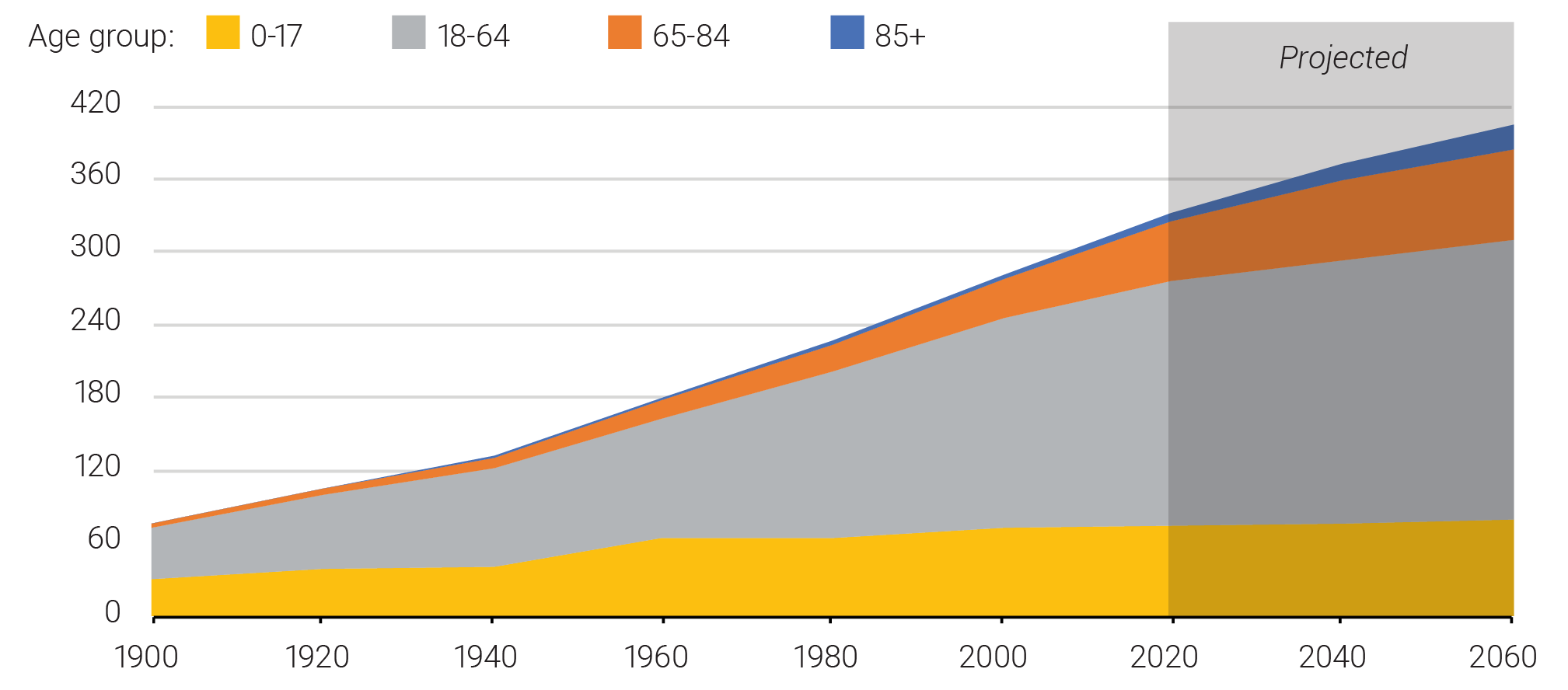
This chart is often shown and as far as I can tell quite accurate; however, there are lies, the truth, and statistics.
The values not shown on this chart are critically important to understanding chart: Percent of population under 18yrs AND membership headcount as a percentage of total elgible youth.
Scouting America has held steady at 2% of total elgible youth until about 3 years ago. Specifically retention has increasingly gone down. The organization knows how to recruit but units dont know how to retain.
Still a lot of youth under 17
-
IMHO BSA made the classic error of while having good market share, they started worrying / focusing on how to attract even more market share and not considering how changes may affect current customers. However you may feel, there was a core constituency for the BSA. They had ownership in the program, felt a heavy tradition with the program. The organization still has never fully benchmarked why people join, why they stay, what do their customers want.
BSA shattered that core group in the 70's with wholesale changes (remember ISP and skill awards for Scouting??), they tried to regroup, and then for the next 30 years (maybe 1982 - 2012) were like a small sailboat in a gale, just trying to follow the winds without a firm direction. The suits and other outside influences tore out the foundations. Not to mention the $1 Billion vanity project in West Virginia. They lost a lot of the tradition, a lot of experience, and many of those that had joined and had stayed active for many years.
Scouting is more transactional now, if kids join they get X, as opposed to when kids joined many years ago they joined for fun and adventure. Admittedly all of society is now way more transactional, but BSA or Scouting America is more now about what YOU can get from the program and many time not what your GIVE to the program.
Then there are the two main divides in the organization. Group A wants to build a program, go and do things, enrich youth, challenge them outside their comfort zones, these we call volunteers. Group B wants to keep status quo on the organizational structure and administration, the focus is preservation and keeping the paid jobs and kingdoms in place. The only scoreboard is money raised. This group we call professionals.
In the end, whether Group A or Group B likes it, the BSA (dba as Scouting America) will become a much smaller organization, less professionals, and lesser societal impact. Maybe other groups will fill the void, maybe portions of Scouting will grow. However this shakes out it will not be what the National BSA's rosy growth projections shown at NAM or other meetings think.

-
13 hours ago, Eagle94-A1 said:
No, it is an attitude issue. Sadly I have seen too many pros over the years who could give a flip about the program and volunteers, they just want FOS dollars and membership increases.
No, it is an attitude issue. Sadly I have seen too many pros over the years who could give a flip about the program and volunteers, they just want FOS dollars
and membership increases.Fixed it for you
-
 2
2
-
-
Well - the notation that Scouts did not change 1970 - 2000 is incorrect. The Improved Scouting Program in 1973 took out a chunk of participants, then the pivot back, then the endless monkeying with the program is the start of the slide. Also the BOY POWER MANPOWER program / effort (early 70's) wherein the plan was to have 33% of boys signed up led to massive membership scandals. While the abuse trials starting in 2000 were a challenge, but the program was already down by half or more at that time
-
1 hour ago, skeptic said:
https://onscouting.org/2026/05/20/qa-with-scouting-america-national-chair-ricky-mason/
The tone is promising, but my confidence in its viability is thin. Take a look. He says some of the right words, but is there any weight in them?
Sooo, maybe good points, lack of specifics. If he had laid out they were reducing councils would have felt better. Glad he didn't start with "your kids are safer with us", that does not need to be the lead in and Go To Market slogan
-
we must make volunteering easier and more rewarding. That means giving volunteers the support, tools and resources they need to succeed.
- I wonder what the plan actually is, sounds correct, but lacks specifics
-
We need to improve both our internal infrastructure and the technology families interact with directly. Parents and volunteers should be able to use their phones and online tools easily to manage registrations, communication and unit activities.
- I wonder what the plan actually is, sounds correct, but lacks specifics
-
Another critical area is branding and marketing. During the pandemic and bankruptcy, we did very little marketing. Now we’re reinvesting in campaigns that better communicate the value of Scouting to parents and families.
- I wonder what the plan actually is, sounds correct, but lacks specifics
-
One challenge we face is that we have significantly fewer district executives and unit-serving professionals than we did several years ago. Those positions are critical because they support units, recruit members and help volunteers succeed. That means some councils may need to rethink how resources are allocated. In some cases, councils may have more property than they currently need, while needing more investment in frontline staff and membership growth.
- So sell assets to hire even more professionals (DE's) who do little to nothing to serve the units, feed the professional commissioned scouter animal
-
Last fall, Scouting America recruited approximately 260,000 new youth members. The problem is that we are still losing more members than we recruit.
- Agree, finally that's been said out loud
-
They need opportunities to spend time with other young people, to be part of a patrol and a community, and to experience the outdoors. Scouting teaches youth how to succeed — but also how to fail and recover from failure. That’s one of the most important lessons young people can learn.
- Agree on that point
-
 1
1
-
we must make volunteering easier and more rewarding. That means giving volunteers the support, tools and resources they need to succeed.
-
1 hour ago, Tron said:
The rumor about renewals was confirmed and briefed at the NAM today. All renewals are moving to February.
See, that is OF COURSE, the real root of membership issues and the decline. Not costs, not program, not movement to a family program, not the literal 1 to 1 adult to youth to be registered to participate; it's timing of renewals.
Glad we have that cleared up
-
On 5/11/2026 at 6:15 PM, skeptic said:
Chipmunks??? Another expense for registrations?
https://onscouting.org/2026/05/11/parents-and-scouters-get-ready-for-chipmunks/
Insert a "jump the shark" meme, this has the organization certainly heading in a new direction
Originally we only had Scouts, then Cubs came 20 years later, which was for 8-10 years olds. In the 60's when I was in Cubs we did basic things but longed to be Scouts to able to do all the cool stuff. Now it is veering heavily to a Family Program, the original idea to help youth develop and grow into independent individuals equipped to take on the real world and make decisions on their own seems have (or is) being cast aside.
SA (sorry I know we're not supposed to abbreviate the name of the organization that lives on abbreviations) is definitely moving heavily to family, moving away from the Scout led program and conceding that the program will be basically (now) 4 year olds to maybe 7th graders
-
 1
1
-
-
- Popular Post
- Popular Post
50 minutes ago, Tron said:A lot of these issues are caused by councils not planning MB events far enough out in advance.
A lot of these issues are caused by councils
not planning MB events far enough out in advanceusing MB classes / events as profit centersFixed it for you
-
 1
1
-
1
-
3
-
On 3/5/2026 at 1:13 PM, qwazse said:
BSA faces a sunken cost dilemma with Summit.
You don't mean that spending almost $1,000,000,000 (yes BILLION) dollars on a property / facility that really has no purpose, did not meet an unfilled need, and has no road to profitability may have a negative impact on the organization that dumped all that money into it?? I am shocked.
-
1
-
-
As we are well into April now (quick check of the calendar). Wonder what the numbers are now?
My intuition tells me that an organization based and financed by membership and units that does not in fact publicly publish the figures about member and units likely has a growth issue with member and units.
Call me crazy
-
On 4/2/2026 at 9:33 AM, Tron said:
Correct, membership is on a near linear decline 10%(ish) year over year. From what I have seen its fairly uniform across the whole country, no single council or region is responsible. I'm increasingly believing that the issue is just a significant amount of untrained or poorly trained unit leaders pushing families out of the program by not running the actual program.
How many recall the feedback a few years back from many of the council leadership and national that what was needed was to edge out the old guard of the BSA and make room for the new leaders, that is what was holding the scouting movement in America back. What the brain trust did not fully take into account was that many of the "old guard" did not really see Scouts as just an activity, but more as a calling and a mission. They were in it for the long haul. Those leaders have in fact moved on and nobody is stepping into the gap. Especially at district and council levels, and obviously the unit level. Getting new leaders is really tough, many families (parents) view Scouting as purely transactional, they pay and the "Unit" provides the program. Not realizing (I feel) that they are in fact the unit. They look around and wonder if they are really getting the bang for their buck. It does not take a detailed accounting to realize if you want to go camping, hiking, build a birdhouse, all of that can be done waay faster and cheaper on your own. Invite kids friends and go to out and do.
Scouts needs to fully figure out what value they actually bring
-
3
-
-
17 minutes ago, Eagledad said:
It's just prideful political temper tantrums. And, more litigation for the youth organizations as young maturing adults realize they were steered toward accepting being a trans person. Doctors and hospitals are already being sued, but eventually they will go after organizations that encourage the youths to continue a lifestyle that led them away from their biological origin. Schools are already in the crosshairs. This is the child abuse of our present culture. And, ironically, women's equality.
Barry
Wonder if there will be secret files and private exclusion lists. What's old is suddenly new again
-
3 hours ago, InquisitiveScouter said:
UPDATE:
01 March ended the grace period for those memberships which expired on 31 Dec. Those expired memberships have now dropped off the rolls.
Let's look at the updated numbers now...
As of 03 March, numbers pulled moments ago...
Same Month Last Year: 980,311 (Mar 2025) all programs...
Total Current Youth: 781,539 (Mar 2026) a 20.28% drop from last year.
Last Year End: 907,950 (This is the 31 Dec 2025 number in the system.) This changed by +1 from previous reports. (weird, huh?)
Dec 2024 End of Year number was: 986,520
These numbers include Learning for Life, 33,478 on the books now.
The current group of professionals and key volunteers know how (in some cases) to raise money. Grow program, not so much. Sad part is they are raising money on the nostalgia of the BSA, not the current BSA
No real effort being made to add units or expand the program. Lots of excuses as to why membership decline, just no real honest effort to make updates so people (families) may want to buy what is being sold
-
1
-
-
8 hours ago, skeptic said:
The scouts never had issue with them, only the parents.
In 1973 the Scouts saw the issue with the change in requirements and the Improved Scouting Program, were you an old Eagle or a New Eagle. Those who all the various policy changes and enhancements handed down from on high over the years have impacted clearly see through the fog.
The Scouts saw CIS for what is was, corporate foolishness. Never underestimate what the youth see and understand. Do not assume that since they were earning the MB they did not see the fallacy in the CIS MB
-
2
-
-
2 hours ago, Navybone said:
terms you use to refute the value of the MB are "feel good requirement" and " no challenge." The mission of Scouting America is to prepare young people to make ethical and moral choices over their lifetimes by instilling in them the values of the Scout Oath and Law. Its vision to make people good citizens. Understanding people makes them good citizens. It does not need to be hard, but knowing how it see others from thier point of view is a mature and effective tool to be a good citizen.
You think there are no answers to the terms and that they can make you Racist. There are definitions. They are in the training that the MB Counselors have to take:
Key definitions included in the materials:- Identities: Traits that make up who a person is, including race, gender, age, religion, and ability.
- Diversity: The presence of a wide range of individual identities.
- Equality: The state of having equal status, rights, and opportunities.
- Equity: Providing resources tailored to individuals to ensure fair access to opportunities.
- Inclusion: Active efforts to create a sense of belonging and participation for all individuals.
- Discrimination: The unjust or prejudicial treatment of different categories of people.
If a scout does not understand them, then we talk about them. Maybe you can explain now they are racist.
If you are a front line leader we talk to Scouts all the time. About many many items, some intentionally and some as casual conversation.
Reminder we are all volunteers. The Cit is Society was a knee jerk reaction to a societal event. We can talk with Scouts about these particular issues, but again, we all have a variety of biases and experiences. There are in fact no right answers to any of the CIS requirements, what is covered is all based on some MB counselors life experiences which may or may not dovetail with the Scouts and their families experiences and beliefs. That could be good or bad. The issue with CIS is it was ill conceived, a trendy MB to satisfy elements in society who don't like Scouting anyway, and honestly would be instructed solely based on the MB counselors beliefs. No objective criteria no objective evaluation, no real requirements.
Best this is a MB be put aside and the organization moves on.
-
2
-
56 minutes ago, Navybone said:
What requirements in the Cit Society MB did you have issue with, do you think were against the ideals and goals of Scouting America?
The main issue was that this was another classroom badge, do it in at Merit Badge U in a few hours. Overall it was an empty suit. While nothing egregious against basic goals, it was not challenging and was a check the box. Nothing to accomplish, no measurable items, just feel good writing. It was smoke and mirrors to say "Hey, look how progressive we are".
Remember the requirements:
1. Before beginning work on other requirements for this merit badge, research the following terms and explain to your counselor how you feel they relate to the Scout Oath and Scout Law: identities, diversity, equality, equity, inclusion, discrimination, ethical leadership, and upstander.Lot of buzz words here, no real meat or challenge, no actual answers, and if challenged one might be cast as racist or worse (not sure there is worse)2. Document and discuss with your counselor what leadership means to you. Share what it means to make ethical decisions.- (a) Research and share with your counselor an individual you feel has demonstrated positive leadership while having to make an ethical decision. (It could be someone in history, a family member, a teacher, a coach, a counselor, a clergy member, a Scoutmaster, etc.)
- (b) Explain what decision and/or options that leader had, why you believe they chose their final course of action, and the outcome of that action
More here, but lot of feel and again, no real challenge here, it is basic writing and rote answers3. Consider ethical decision-making.-
(a) Think about a time you faced an ethical decision.
- Discuss the situation, what you did, and how it made you feel.
- Share if you would do anything differently in the future and if so, what that would be.
-
(b) List three examples of ethical decisions you might have to make in the future at school, at home, in the workplace, or in your community, and what you would do.
- Share how your actions represent alignment with the Scout Oath and Scout Law.
- (c) Explain to your counselor how you plan to use what you have learned to assist you when that time comes, and what action(s) you can take to serve as an upstander and help other people at all times.
Again, lots of touchy feely - feel good stuff , but as with all the requirements, no real challenge here, it is basic writing and rote answers. I am sure the ChatGPT answers were great4. Repeat the Scout Oath and Scout Law for your counselor. Choose TWO of the following scenarios and discuss what you could do as a Scout to demonstrate leadership and your understanding of what it means to help others who may seem different from you:- (a) Scenario 1: While at camp, a youth accidentally spills food on another camper. The camper who gets spilled on gets angry and says something that is offensive to people with disabilities; their friends laugh. What could/should you do?
- (b) Scenario 2: Your friend confides in you that some students in school are making insulting comments about one of their identities, and that those same students created a fake social media account to impersonate your friend online and post messages. What could/should you do?
- (c) Scenario 3: A new student in your class was born in another country (or has a parent who was born in another country). Your friends make rude comments to the student about their speech or clothes and tell the student to "go back home where you came from." What could/should you do?
This is a basic HR opinion test recycled or really bad training video out take, not overtly terrible, but if this is our core mission, these items could be included in other existing merit badges5. Document and discuss:- (a) Ideas on what you personally can do to create a welcoming environment in your Scouting unit.
- (b) An experience you had in which you went out of your way to include another Scout(s) and what you did to make them feel included and welcomed.
- (c) Things you can do to help ensure all Scouts in your unit are given an opportunity to be heard and included in decision-making and planning.
Not a terrible requirement, but again, could be included in other existing merit badges6. With your parent or guardian's approval, connect with another Scout or youth your own age who has an identity that's different from yours. (This means a trait, belief, or characteristic different from you.)- (a) Share with each other what makes the different aspects of your identity meaningful/special to you
- (b) Share with each other ONE of the following options:
-
(1) Option 1—A time you felt excluded from a group:
- What was the situation?
- How did it make you feel?
- What did you do?
- Did anyone stand up for you?
- What did you learn?
- Would you do anything differently today?
-
(2) Option 2—This imaginary situation: You're attending a new school and don't know anyone there yet. You notice they dress very differently than you do. At lunchtime, you decide you'll try to sit with a group to get to know other students. People at two tables tell you there is someone sitting at the currently empty seat at their table, so you end up eating by yourself. Discuss:
- How would that make you feel?
- What could the students have done?
- If that happened at your school, what would you do?
- (c) Discuss with your counselor what you learned from the discussion with the other Scout or youth.
The weakest requirement, as if used in the broad definition "who has an identity that's different from yours", basically that is anyone that is not in fact you. We each have a unique identity. The MB writers could not bring themselves to actually challenge Scouts to find someone of different gender, race, or nationality.7. Identify and interview an individual in your community, school, and/or Scouting who has had a significant positive impact in promoting diversity, equity, and inclusion. If you feel your community, school, or local Scouting group does not have such an individual, then research a historical figure who meets these criteria, and discuss that person with your counselor.- (a) Discover what inspired the individual, learn about the challenges they faced, and share what you feel attributed to their success
- (b) Discuss with your counselor what you learned and how you can apply it in your life.
Self promotion and shameless support of the DEI cycle, let's applaud the program we are stoking8. With the help of your parent or guardian, study an event that had a positive outcome on how society viewed a group of people and made them feel more welcome. Describe to your counselor the event and what you learned.Not a terrible requirement, but again, could be included in other existing merit badges9. Document and discuss with your counselor three or more areas in your life outside of Scouting where you feel you can actively provide stronger leadership in:- (a) Making others feel included.
- (b) Practicing active listening.
- (c) Creating an environment where others feel comfortable to share their ideas and perspectives.
- (d) Helping others feel valued for their input and suggestions.
- (e) Standing up for others.
A feel good requirement, no actual measurements, just self promotion and support of the DEI cycle10. Discuss with your counselor how stereotyping people can be harmful, and how stereotypes can lead to prejudice and discrimination. Share ideas you have for challenging assumptions and celebrating individuality.A feel good requirement, no actual measurements or documented achievements, just self promotion and support of the DEI cycle11. Scouting strives to develop young people to be future leaders in their workplaces, schools, and community environments. As you look at your current involvement in school, your family, Scouting, your job, and/or community, think about how you can have a positive impact in diversity, equity, and inclusion.- (a) Describe your ideas on how you can and will support others with different identities to feel included and heard at your school, workplace, and/or social settings in your community.
-
(b) Explain how including diverse thoughts and opinions from others with different identities can:
- Make your interactions more positive.
- Help everyone benefit by considering different opinions.
- (c) Give three examples of how limiting diverse input can be harmful.
- d) Give three examples of how considering diverse opinions can lead to innovation and success.
As with Req 7, basic self promotion and shameless support of the DEI cycle, let's applaud the program we are stoking
-
1
-
1
-
 1
1
-
2
-
2 hours ago, InquisitiveScouter said:
Here is what I can see...
Post here if you want your specific council numbers, or I can see by state, also. Also, if you want to know by program, sing out...
As of today, National level, all programs including Learning for Life, total youth registered is 877, 225. Same month last year number was 986,520.
So, overall, drop is 109,295 Scouts, or 11.08% loss, from Dec 2024 to Dec 2025 I'll check these numbers again after 31 Dec, when many current registrations expire, and again after mid-March, when the 60 day grace period expires.
We are losing about 10% in our Troop, due to those turning 18. Hope to gain those back during crossover season.
Please remind me

Would like to know Year over Year for Georgia and also Atlanta Area Council
-
I do wonder what the "Actual" BSA National Numbers are at this point. Nobody really knows. Nobody knows where to get the information. Most people have stopped asking. Main success is judged by funds raised. Most of our council staff is focused on getting cash, to support all the staff that is raising cash.
In our district we have and continue to lose troops and packs, but not sure there is any effort to save any of them or figure a way to stem the tide. We have not witnessed an actual DE or other council staff in the wild in forever. It's not that we have a bad relationship, that would infer our units actually knew who they were, we literally have no relationship. There are maybe 20 units in the district (though I think less) and one would assume they may come by annually to see what's up.
In the end BSA (sorry SA) will likely not end with a bang, it will just not be around the professionals that were supposed to be the managers and provide vision will go raise money elsewhere.
-
1
-
1
-
1
-
-
4 hours ago, Tron said:
Council Service Territory maps were updated last night. It's not clear which councils merged but it looks like at least 1 council in California is merged out and 1 council in Pennsylvania or New Jersey is merged out as well.
Still show 234 councils, which means about 4,200 youth participants per council. The excessive overhead costs continue.
Assuming a SE costs $200K (all in salary and benefits) that means each youth registered pays +/- $48 just for the SE overhead.
-
1
-
-
16 minutes ago, qwazse said:
The delusional thinking regarding increased membership stupefies me. We will be fortunate if we see a turnaround in a decade. Prove me wrong. (Seriously, please prove me wrong.)
This summer, I did meet a couple that said they would not support our troop if it ever went coed. If five girls approach me to start a unit, I’ll help them. But, I have no inclination to hazard community support if SA continues the corporate doublespeak of “family” scouting. I’d rather say our CO fields a unit for boys, and one for girls, and they sometimes join in the same activities.
On the hoped for increased membership related to girls join. First on girls joining troops and cubs, not my cup of tea, but if folks want to pursue it fine, but let's be honest about the background.
BSA (at the time) had Coed options; Explorers and Ventures, neither of which was overly successful and honestly BSA had no idea what to really do with the programs. The REAL challenge to the BSA was continuing decline in membership in 2016 - 2018. If you actually list to Surbaugh's town hall interview (as the announcement on adding girls was made) he basically says that adding girls to packs and troops was the only idea they had left. The brain trust had no other real ideas or had done no real examination of how to grow, so hey, let's add girls.
This was not really to provide diverse opportunities, not to serve an underserved group, not to right some perhaps wrong, no, BSA basically (to quote Animal House) needed the dues. Now as this has evolved, many reasons have been developed and applied on why BSA (now SA) did this, but the base reason is this is the only way they felt they could stem the drop in membership.
And that is the real deep issue, they (BSA professionals, National Board, regional teams, et al) have never really fully defined the WHY in the drop in membership, they have never truly delved deep and gotten into the reason. Basically an echo chamber of potential ideas that may work have been bandied about (Scout Me In??). This has been ongoing from Improved Scouting Program in the 70's (it wasn't) to the current expansion of classroom focused activities. What did set BSA (now SA) apart is the camping and outdoors, getting youth out of their comfort zones, and really becoming unique in the crowded market place of youth activities. Sadly SA is not that group and the activities they want to focus on or move towards (safer and less of the messy outdoor stuff) are just like so many other groups provide and a lot of those have waaay less overhead.
Adding girls to the rosters will likely not stem the decline as National and the high level volunteer groups NEVER defined the WHY for the decline. If one cannot define the problem, they can never solved the problem.
-
1
-
2
-
-
Family Troop. That's a real selling point for the 11 - 17 years olds
-
3
-
-
3 hours ago, Eagle94-A1 said:
However, with everything the council has done, and not done, we don't want them to get a dime more than what they are charging.
We had a troop near us that folded and we rolled their Scouts into our troop. Their SM became one of our ASMs. Honestly the only interaction or feedback from the council was an inquiry about the Troop treasury / funds. That inquiry was ignored, funds went to the CO
-
1
-
1
-
-
45 minutes ago, skeptic said:
There is a certain irony that National grew from the need to respond to the trenches where Scouting struggled to survive, but was locally vibrant for the times. And now, when we are back to struggles in similar chasms, they seem to be unaware of reality too often. Our local council seems too often to simply not get that most volunteers simply want to be kept in the loop. Our successes are almost all unit based, and seldom noted by Council, unless they find issue.
Our successes are almost all unit based, and seldom noted by Council, unless they find
issuea way to monetize that success.Fixed it for you
-
1
-
1
-
-
- Popular Post
- Popular Post
Professional scouters that have clearly set goals that focus on raising money (for what nobody knows) rather than focusing on actually growing the program
A National Organization that continues to believe the infrastructure needs to be reflective of the 70's (almost 5 million) rather than today (less than 1 million). Get rid of councils and overhead.
-
6
Options after turning 18
in Open Discussion - Program
Posted
Only caution is the YPT or whatever they call it now. If they are active and still in high school "technically" they would not be able to say give a ride home from school for a friend under 18 who happens to be in the troop or in any troop. That would violate the 1 on 1 deal. Not saying it's logical, but not sure what the solution may be.